Please fully sanitize this HTML for production use: remove all AI-generated markup and artifacts (classes, data attributes, code blocks used for prose, broken inline tags), rejoin any fragmented sentences, and return clean, semantic, CMS-safe HTML only. do not break up. in one paragraph like how it was pasted
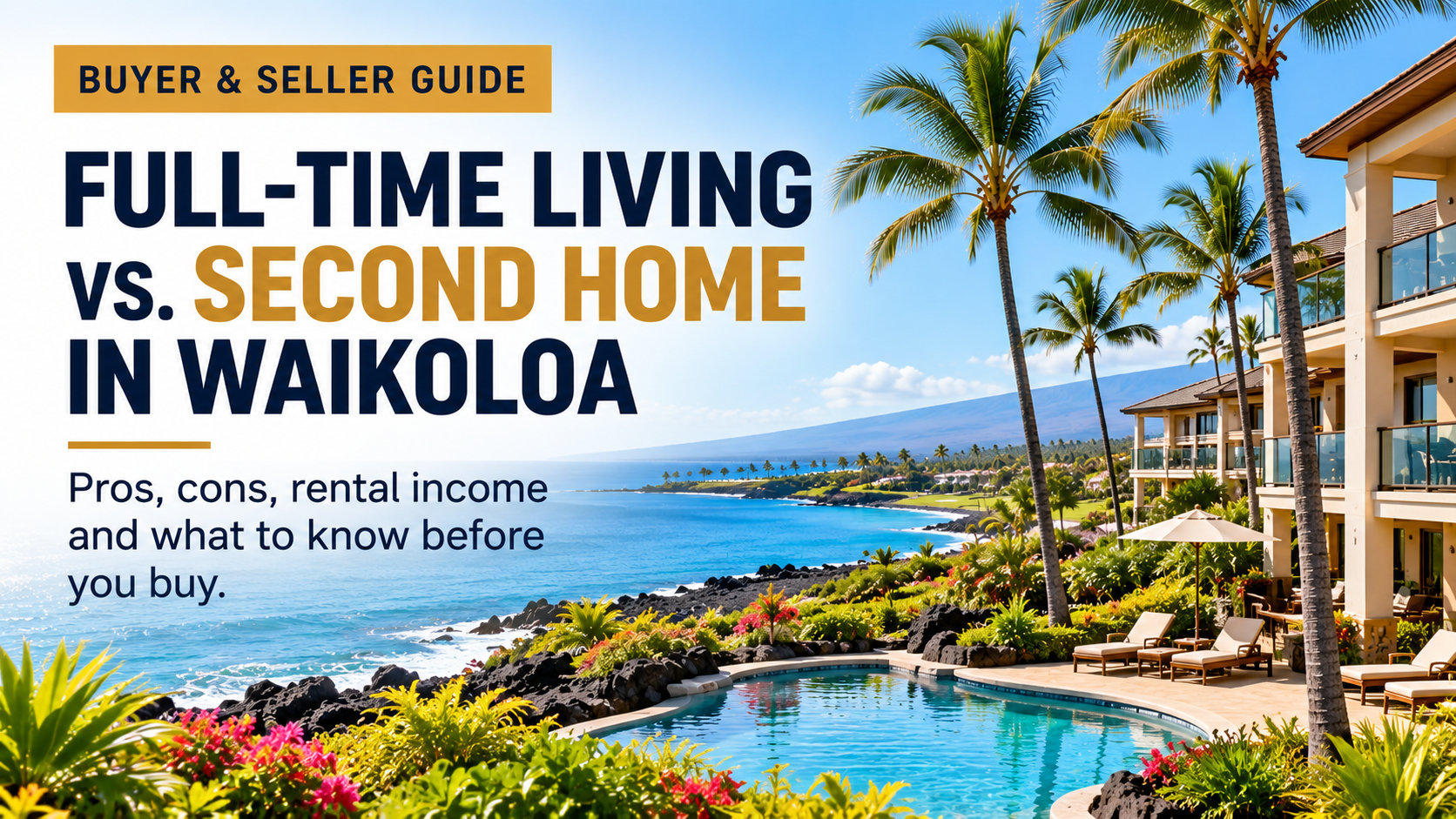
Quick Answer: Living full-time in a Kona-Kohala Coast resort condo means adapting to a transient community with constant vacation renters, whereas using it as a second home allows you to enjoy resort-style amenities part-time while generating rental income. Buyers must weigh the vibrant, high-turnover resort energy against the need for permanent residential peace.
Key Takeaways: Kona-Kohala Coast Resort Real Estate
- Transient Environment: Full-time residents must accept high turnover, vacationing families, and shifting noise levels in resort communities like Waikoloa Beach Resort.
- Lifestyle vs. Investment: Second-home owners can offset holding costs through vacation rentals, but full-time dwellers sacrifice traditional neighborhood stability for resort amenities.
- Kona-Kohala Coast Real Estate Dynamics: Evaluating property types across Kukio, Hualalai, Mauna Kea, Mauna Lani, and Waikoloa requires understanding local zoning and HOA rules.
Navigating the Kona-Kohala Coast real estate market requires understanding how resort communities function day-to-day. Below, we address the critical questions buyers and sellers ask when choosing between full-time resort living and a part-time second home strategy.
What Is It Really Like Living Full-Time in a Kona-Kohala Coast Resort Condo?
Living full-time in a Kona-Kohala Coast resort condo means completely embracing a transient environment. More often than not, your neighbors will change every week. You will experience a revolving door of vacation renters, families with children on holiday, and fluctuating noise levels in the hallways and pool areas. While some days are blissfully quiet, other weeks bring heavy foot traffic and luggage rolling past your door at all hours. If you choose this lifestyle, you must decide whether the trade-offs of constant vacation energy are worth the convenience of stepping right outside your condo into top-tier resort amenities. I would not be surprised to see full-time buyers underestimate this high-turnover dynamic until they experience peak tourism seasons firsthand. Proximity to championship golf courses, pristine beaches, and fine dining at Queen’s Marketplace makes it enticing, but you are trading traditional neighborhood stability for resort-style recreation. It is simply economics and lifestyle preference colliding in paradise.
Is Buying a Vacation Rental in Waikoloa Beach Resort a Smart Financial Move?
Purchasing a vacation rental within Waikoloa Beach Resort offers a compelling way to offset ownership expenses while securing a valuable piece of Big Island real estate. When you utilize the property as a second home part-time and rent it out as a short-term vacation rental the rest of the year, gross rental revenues can significantly help cover mortgage, insurance, and maintenance costs. More often than not, success in this market depends on rigorous property management, professional marketing, and strategic calendar optimization. Buyers must analyze historical occupancy rates and average daily rates specific to complexes like Kolea or Halii Kai. I would not be surprised to see net returns fluctuate based on broader travel trends and seasonal demand along the Kona-Kohala Coast. Furthermore, you must factor in local GET and TAT taxes, booking platform commissions, and dedicated cleaning fees. It is simply economics: treating your condo as an active business while you are away requires careful financial planning.
How Do HOA Rules and Transient Accommodations Impact Full-Time Residents on the Kona-Kohala Coast?
Navigating Homeowners Association rules is critical for anyone considering full-time residency in a Kona-Kohala Coast resort condo. Because these complexes are designed to accommodate short-term vacation rentals, the governing documents prioritize flexibility for visitors, which directly affects full-time dwellers. More often than not, you will find specific HOA bylaws dictating everything from parking restrictions and pet policies to rental management company requirements and lanai storage. For instance, restrictions on permanent personal modifications or mandatory architectural guidelines can limit how you customize your living space. I would not be surprised to see full-time residents occasionally frustrated by rules tailored primarily to transient guests rather than permanent homeowners. Moreover, shared amenities like fitness centers and pools can experience heavy wear and tear, driving up maintenance budgets. It is simply economics that high-turnover resort properties face accelerated depreciation, leading to frequent special assessments and rising monthly association dues that impact long-term resident budgets.
Should I Buy a Second Home in Mauna Lani or Mauna Kea Resort for Part-Time Use?
Choosing a second home in Mauna Lani or Mauna Kea Resort elevates the part-time ownership experience along the majestic Kohala Coast. These master-planned communities offer gated exclusivity, world-class golf, and secluded beach access that attract discerning buyers seeking a tranquil Hawaiian retreat. More often than not, second-home owners in these premier resorts prioritize privacy and long-term asset appreciation over high-yield vacation rental income, though options like Mauna Lani Fairways or Waiulaula still offer rental flexibility. I would not be surprised to see demand for these luxury properties remain remarkably resilient, driven by limited inventory and high barriers to entry. Owning a second home here allows you to drop into paradise whenever you desire, keeping your personal belongings secure in your own private closet without managing constant turnover. It is simply economics: investing in a premium coastal enclave trades higher initial capital for unmatched lifestyle quality and strong historical property appreciation.
What Are the Hidden Costs of Owning a Resort Condo Full-Time on Hawaii’s Big Island?
Owning a resort condo full-time on the Kona-Kohala Coast involves navigating a complex layer of expenses that extend far beyond the initial purchase price and standard mortgage. More often than not, buyers overlook escalating monthly Homeowners Association fees, which frequently range from $800 to well over $1,500 per month depending on the square footage and resort amenities. These dues cover common area maintenance, trash, water, and resort security, but they are subject to steady annual increases. I would not be surprised to see unexpected special assessments hit condo owners when major capital improvement projects—such as roof replacements or exterior painting—exceed reserve funds. Additionally, high insurance premiums for coastal properties, general excise taxes, and rising property assessments on the Big Island can strain a fixed full-time budget. It is simply economics: maintaining a luxury resort property requires a healthy financial cushion to handle Hawaii’s unique island operational costs.
The Bottom Line: Connect with Dan Polimino and The Hawaii Team to Find Your Ideal Kona-Kohala Coast Home
Navigating the choice between a full-time resort residence and a part-time second-home investment on the Kona-Kohala Coast requires expert local guidance, deep market insight, and a clear understanding of your lifestyle goals. Whether you are drawn to the dynamic energy of Waikoloa Beach Resort or the exclusive tranquility of Mauna Lani, Dan Polimino and The Hawaii Team are here to help you evaluate every property type, HOA restriction, and financial variable. Reach out today to start your Big Island real estate journey with confidence and expertise by your side.
“Whether you’re looking for a vibrant vacation rental investment or a peaceful island retreat, aligning your real estate strategy with your lifestyle goals is the key to long-term success on the Kona-Kohala Coast.” — Dan Polimino
Frequently Asked Questions
Q: Can I legally live full-time in a short-term vacation rental condo on the Kona-Kohala Coast? A: Yes, you can legally live full-time in a resort-zoned condo, provided the county zoning and HOA bylaws permit residential occupancy. However, you will be living alongside a constantly rotating base of vacation renters rather than permanent neighbors.
Q: What are the main differences between owning at Waikoloa Beach Resort versus Mauna Lani Resort? A: Waikoloa Beach Resort generally offers a more active, commercial-friendly resort vibe with vibrant shopping centers and diverse condo pricing starting around $700,000 to over $1.5 million. Mauna Lani Resort leans toward a quieter, ultra-luxury residential feel with higher average entry points and exclusive private beach club access.
Q: How do high HOA fees affect full-time residents in Hawaii resort communities? A: High monthly HOA fees—often ranging from $800 to $1,500+—cover extensive resort amenities, landscaping, and exterior maintenance, but they add a substantial fixed monthly burden to full-time residents living on fixed or traditional incomes. Furthermore, these fees escalate annually and are subject to special assessments for major capital projects.