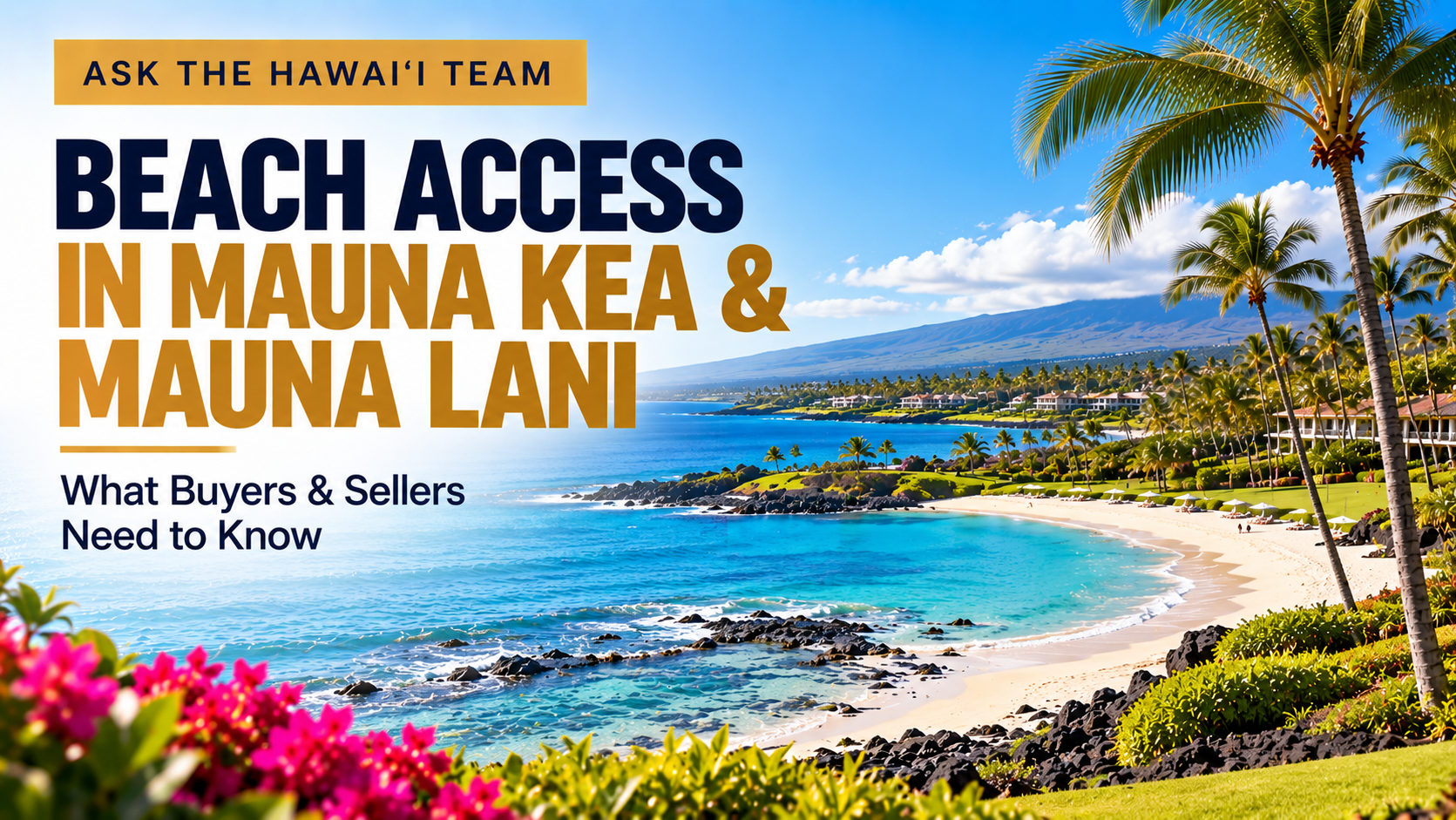
Quick Answer: By law, all beaches in Hawaii are state-owned and completely public, meaning no homeowner—regardless of how exclusive the Kona-Kohala Coast resort is—can restrict public access or private beachfront. However, master-planned communities like Mauna Kea and Mauna Lani provide seamless golf cart pathways, resort amenities, and dedicated routes that ensure second-home owners and vacation rental guests bypass tourist crowds during peak seasons.
Key Takeaways: Understanding Kona-Kohala Coast Resort Real Estate
- Public Domain Laws: Hawaii state law dictates that all beaches are public property, prohibiting private ownership or gated restrictions on the shoreline.
- Resort Layout Dynamics: Communities like Mauna Kea and Mauna Lani are divided by the highway into ocean-side (makai) and mountain-side (mauka) sections, both offering reliable access.
- Peak Season Management: Understanding resort-specific golf cart paths and access points is crucial for navigating tourist crowds during high-demand vacation periods.
- Buyer vs. Seller Impact: Clear transparency regarding beach proximity and access routes directly influences luxury vacation rental ROI and second-home valuations.
Navigating shoreline rules and tourist congestion is one of the most critical steps for anyone evaluating luxury real estate along the Kona-Kohala Coast. Below, we address the top questions buyers and sellers ask regarding beach access, resort layouts, and vacation rental potential in Mauna Kea and Mauna Lani.
Can Private Homeowners Restrict Public Access to Beaches on the Kona-Kohala Coast?
More often than not, buyers relocating to luxury enclaves like Mauna Kea assume that multi-million dollar property purchases grant exclusive private rights to the adjacent sand. It is simply economics and state legislation that dictate otherwise. Under Hawaii law, all beaches are entirely state-owned and open to the public, meaning no billionaire or exclusive resort association can fence off the shoreline or block coastal transit paths. When evaluating a second home or condo, you must understand that public pedestrian easements allow anyone to walk past your property line or along the high-wash line of the wave. For example, even ultra-luxury estates fronting Kaunaʻoa Bay cannot legally bar public beachgoers from utilizing the sand. I would not be surprised to see uneducated buyers get frustrated by this, but my Dan Polimino advisory framework helps clients map out privacy barriers versus public rights-of-way. Vacation rental guests also appreciate this transparency, ensuring accurate expectations regarding coastal foot traffic.
How Does Being on the Mauka Side Versus Makai Side Affect My Beach Access in Mauna Kea Resort?
More often than not, the highway split within master-planned developments dictates your daily transit logistics to the ocean. The resort layout is fundamentally divided into the makai (ocean-side) and mauka (mountain-side) sections. If you own a luxury vacation rental on the makai side, your beach commute is a matter of stepping out your back door or taking a short, breezy golf cart ride directly onto the sand. Conversely, properties positioned on the mauka side face a longer logistical journey. While golf carts are technically permitted to navigate designated resort paths from the mountain side down to the coast, it is a significantly extended trip. For instance, crossing beneath the highway corridors requires adherence to specific community transit routes. It is simply economics that makai properties command a steeper price tag due to this seamless proximity, whereas mauka condos offer a higher entry-level value for buyers willing to trade a five-minute cart ride for lower price-per-square-foot acquisition costs.
Is Buying a Vacation Rental in Mauna Lani a Good Investment During Peak Tourism Season?
More often than not, acquiring a luxury condo for short-term rental purposes in Mauna Lani yields robust returns, provided you master the local tourism calendar. Our peak high-demand season initiates dynamically around Thanksgiving and runs heavily through mid-April to the end of spring. During this window, tourist influx surges dramatically, driving up nightly rates and occupancy percentages across the entire Kona-Kohala Coast. It is simply economics that high demand strains public parking stalls and resort beach access points during these peak months. For a vacation rental owner, having a clear operational strategy to guide guests around morning parking bottlenecks is essential for maintaining five-star reviews. I would not be surprised to see well-managed properties outperforming the market baseline by 20% simply because the owners implemented my proprietary guest-routing system, ensuring renters bypass main public congestion zones to reach pristine shoreline spots effortlessly.
How Do I Guarantee Easy Beach Access for My Guests in Mauna Kea Resort?
More often than not, maximizing your vacation rental’s occupancy hinges on how easily your guests can navigate from the front door to the shoreline. To guarantee a frictionless experience during peak tourism spikes, your second home must be equipped with the right resort amenities, such as a dedicated street-legal golf cart and clear, step-by-step navigational maps highlighting resort paths. When visitors stay on the ocean side, they enjoy immediate walkability, but mauka property owners must provision their rentals with reliable transport assets to bridge the distance. For example, maintaining an active resort club membership often grants privileged parking or preferred beach amenity access that bypasses general public lines. It is simply economics: properties that successfully market their streamlined, hassle-free beach access command higher average daily rates. I would not be surprised to see rentals lacking this infrastructure struggle with guest satisfaction scores when public parking lots fill up by 9:00 AM.
What Should Sellers Disclose About Beach Proximity When Listing a Kona-Kohala Coast Second Home?
More often than not, full transparency regarding exact beach transit times protects sellers from post-closing disputes and maximizes market valuation. When listing a luxury condo or second home along the Kona-Kohala Coast, marketing materials must accurately reflect whether the property sits on the makai or mauka side of the resort highway. It is simply economics that misrepresenting a mauka property’s walking distance to the beach will alienate luxury buyers who demand true convenience. Sellers should proactively disclose golf cart path rules, parking availability, and seasonal congestion patterns. I would not be surprised to see transparent listings close faster and appraise cleaner because sophisticated buyers value verified logistical data. Utilizing my structured disclosure checklist ensures that every prospective buyer understands the exact transit dynamics before submitting an offer on your resort asset.
The Bottom Line: Master Kona-Kohala Coast Beach Access Before You Buy or Sell
Navigating beach access along the Kona-Kohala Coast doesn’t have to be a guessing game. Whether you are buying a makai sanctuary or selling a mauka mountain-view condo, understanding Hawaii’s public domain laws and resort layout dynamics is the key to maximizing both lifestyle satisfaction and vacation rental ROI. By partnering with an experienced advisory team that leverages real market data and proven property strategies, you can eliminate guesswork and secure your place in paradise.
“Real estate success on the Big Island isn’t just about finding the right view—it’s about mastering the logistics of island living so you and your guests can enjoy effortless access to the best beaches in the world.” — Dan Polimino
Frequently Asked Questions
Q: Do oceanfront homeowners in Hawaii own the sand in front of their homes? A: No, under Hawaii state law, all beaches up to the high-wash line are public property owned by the state, meaning private homeowners cannot legally restrict public access or beach transit.
Q: How do mountain-side (mauka) owners get to the beach in Mauna Kea and Mauna Lani? A: Mauka owners typically utilize street-legal golf carts or resort vehicles, navigating designated community pathways and highway underpasses to reach the ocean-side resort amenities.
Q: How do peak tourism seasons impact beach parking and access at Kona-Kohala Coast resorts? A: Peak seasons—running from Thanksgiving through mid-April—significantly increase visitor volume, leading to crowded public parking lots and heavy morning traffic along resort access points.