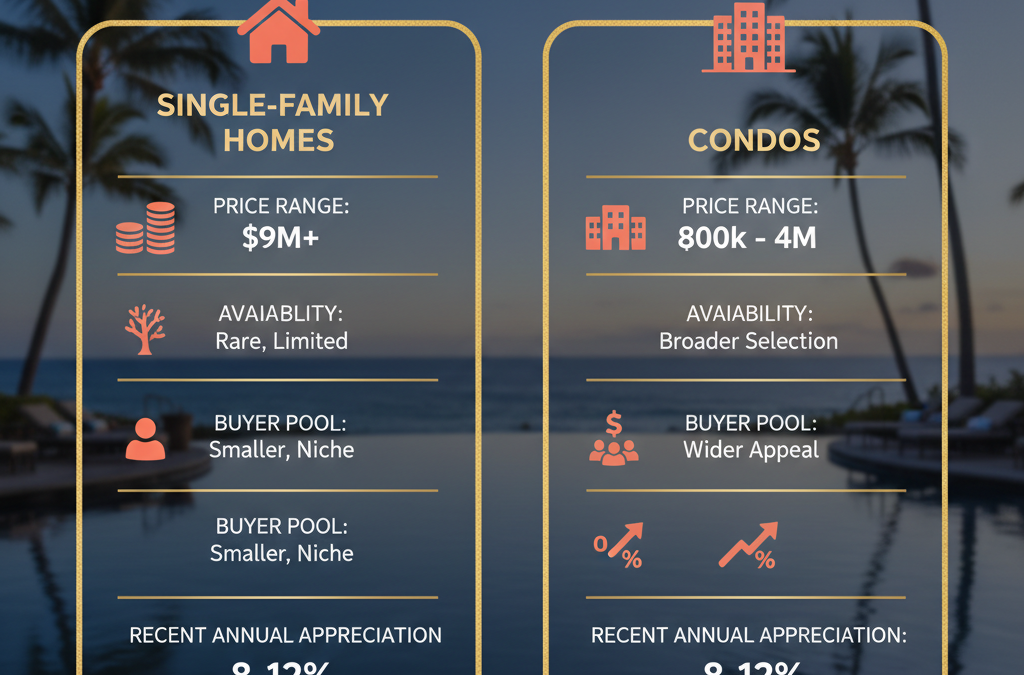
Quick Answer: The credit collapse introduces volatility and stricter lending, potentially slowing luxury real estate transactions on the Kona-Kohala Coast. For vacation rental investments, this could mean fewer buyers, longer market times, and a need for stronger financial positioning, though prime properties in resorts like Mauna Kea often retain value due to limited supply and high demand.
Key Takeaways: Navigating Credit Market Shifts in Luxury Hawaii Real Estate
- Tighter Lending Standards: Expect more rigorous qualification processes and potentially higher interest rates for luxury property financing.
- Impact on Buyer Pool: A credit crunch can reduce the number of qualified buyers, potentially extending market times for sellers.
- Resilience of Prime Assets: High-demand, limited-inventory properties in resorts like Hualalai and Mauna Kea tend to be more insulated from broader market downturns.
- Importance of Cash Buyers: A significant portion of luxury transactions on the Kona-Kohala Coast are cash-based, offering some stability amidst credit fluctuations.
- Strategic Timing: Understanding credit market dynamics is crucial for both buying and selling decisions to optimize investment returns.
Over nearly two decades selling luxury homes on the Kona-Kohala Coast, I’ve worked with hundreds of affluent individuals considering Hawaii as a second home or vacation rental investment. One of the most common questions I hear is: “How will economic shifts, like a credit collapse, impact my luxury real estate plans?”
The answer isn’t magic—it’s a system. What I call the Polimino Market Navigation System is the result of years of testing, refinement, and proven results. But rather than just telling you about the system, let me answer the five most common questions buyers and sellers ask me about navigating credit market challenges. These are real questions from real clients and the honest answers that explain exactly what we do differently.
Is the credit collapse a concern for selling my luxury condo on the Kohala Coast?
Yes, it’s a valid concern, but the impact on luxury condos on the Kona-Kohala Coast is often nuanced. A credit collapse typically leads to tighter lending standards, meaning fewer buyers might qualify for large mortgages or they might face higher interest rates. This can reduce the overall buyer pool and potentially extend the time it takes to sell.
However, prime luxury properties, especially in sought-after resorts like Mauna Lani or Waikoloa, often attract cash buyers or those with significant liquid assets, making them somewhat more resilient. In 2008, for example, while the broader market stalled, high-end properties with unique features still found buyers, albeit at a slower pace. Limited supply in desirable locations helps maintain long-term value.
How will the credit collapse affect my vacation rental investment in Mauna Kea?
For vacation rental investments in Mauna Kea, a credit collapse can present both challenges and opportunities. Reduced credit availability can dampen overall economic confidence, potentially impacting tourism and rental occupancy rates.
However, Mauna Kea’s prestige and established luxury appeal mean it often attracts a resilient clientele less affected by moderate economic shifts. If credit tightens significantly, it could also create opportunities for well-capitalized investors as some sellers become more motivated.
In many past downturns, properties in top-tier resorts like Mauna Kea have recovered faster and maintained long-term value. For example, after the 2008 financial crisis, rental income for well-managed properties stabilized within roughly 18–24 months.
What should I know about the credit collapse before buying a luxury second home in Hualalai?
Before buying a luxury second home in Hualalai during a credit collapse, it is important to understand that financing options may become more limited and potentially more expensive. Lenders typically become more risk-averse, requiring higher credit scores, larger down payments, and stricter documentation.
This means buyers should ensure their financial profile is strong or be prepared to purchase with cash. At the same time, tighter credit conditions can sometimes create buyer opportunities, allowing negotiation on price or terms that may not exist during stronger markets.
During previous credit disruptions, some Hualalai properties remained on the market longer than usual, allowing prepared buyers to secure favorable purchases.
How does credit availability affect luxury home financing in Mauna Lani?
Credit availability directly influences luxury home financing in Mauna Lani by affecting interest rates, loan-to-value ratios, and overall lender appetite for large mortgages.
When credit is abundant, financing tends to be easier and more affordable, which supports buyer demand. When credit tightens, lenders often reduce loan-to-value ratios and increase borrowing costs. For example, financing that once allowed 80% loan-to-value may shift to 60–65% during tighter lending cycles.
Industry data frequently shows that even in luxury markets, financing conditions can significantly affect buyer activity and affordability.
What are the risks of a credit collapse for Hawaii vacation rental owners?
For Hawaii vacation rental owners, the primary risks during a credit collapse include reduced travel demand and potential pressure on property values. Lower consumer confidence and restricted personal credit can lead to fewer tourists, which may temporarily reduce occupancy rates and rental income.
However, the unique appeal of the Kona-Kohala Coast and its resort communities often makes them more resilient than broader markets. Owners with strong financial reserves or diversified income streams are generally better positioned to manage temporary downturns.
During the 2008 recession, some vacation rentals experienced occupancy declines of approximately 15–20%, but demand gradually recovered as travel markets stabilized.
The Bottom Line: Strategic Navigation in Uncertain Credit Markets
Navigating the luxury real estate market on the Kona-Kohala Coast during periods of credit uncertainty requires a strategic and informed approach. Understanding how credit availability affects financing, buyer behavior, and property values can help both buyers and sellers make better decisions.
While challenges can arise during credit disruptions, the limited supply and global appeal of prime Hawaii real estate often provide a degree of long-term stability.
I would not be surprised to see continued resilience in the ultra-luxury segment, even during periods of tighter credit, due to the strong presence of cash buyers.
Frequently Asked Questions
Q: Is now a good time to buy a second home in Hawaii given the credit market?
A: It depends on your financial position. Tighter credit can reduce buyer competition and create opportunities for well-capitalized buyers to negotiate favorable terms, though borrowing costs may be higher.
Q: How does credit availability impact luxury home values in Kukio?
A: Reduced credit availability can slow transaction activity and sometimes lead to price adjustments. However, Kukio’s exclusivity and limited inventory often make it more insulated than broader markets.
Q: Will a credit collapse make it harder to get a mortgage for a luxury property on the Big Island?
A: Generally yes. Lenders typically require higher credit scores, larger down payments, and more detailed income verification during credit contractions.
Q: How do interest rate increases affect potential rental income?
A: Higher interest rates increase mortgage costs, which can reduce net rental cash flow if rental rates do not rise at the same pace.
Q: Should I wait for credit markets to stabilize before selling my luxury vacation rental?
A: Not necessarily. While stable credit markets can increase buyer activity, prime properties often attract interest even during uncertain periods. Market timing should be evaluated based on property type, location, and current demand.