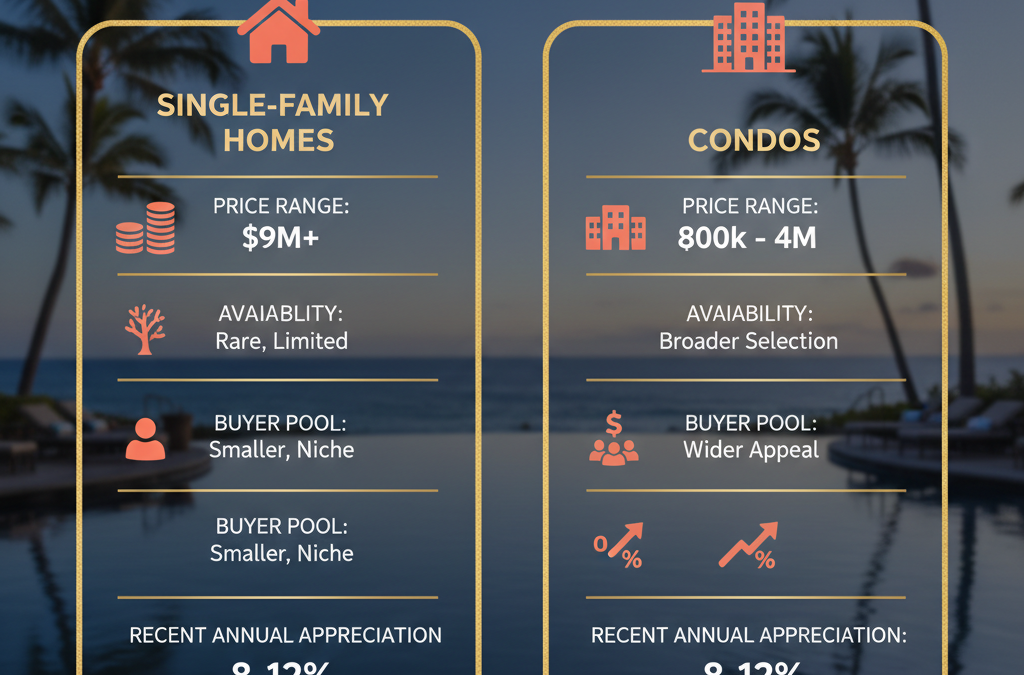

Quick Answer: For 2026, I anticipate the Kona–Kohala Coast luxury real estate market will experience stability with slight appreciation, projected at 3–5% overall. While not the explosive growth of past years, well-priced properties—especially those with ocean views and modern amenities—will continue to be a sound investment driven by discerning high-net-worth buyers.
Key Takeaways: Kona–Kohala Coast Real Estate Outlook for 2026
- Stability Ahead: Expect a normalized market, moving away from the frenetic pace of 2020–2022, but without a significant downturn.
- Modest Appreciation: Overall price growth is forecast at 3–5%, with specific micro-markets potentially seeing higher gains.
- Buyer Discretion: Buyers will have slightly more time and room for negotiation, emphasizing the importance of realistic pricing for sellers.
- Luxury Remains Robust: The $3M+ segment, driven by lifestyle and legacy buyers, is less sensitive to interest rate fluctuations and will command top dollar for unique properties.
- Strategic Selling: Sellers must focus on realistic pricing and impeccable presentation to stand out in a more discerning market.
Over nearly two decades selling luxury homes on the Kona–Kohala Coast, I’ve worked with hundreds of affluent individuals, from mainland investors to local professionals. One of the most common questions I hear is: “What’s next for real estate here on the Big Island of Hawaiʻi?”
The answer isn’t magic—it’s a system. What I call the Polimino Market Insight System is the result of years of testing, refinement, and proven results. But rather than just telling you about the system, let me answer the most common questions buyers and sellers ask me about the 2026 Big Island real estate forecast. These are real questions from real clients, and the honest answers that explain exactly what we do differently.
How will interest rates impact my decision to buy a luxury home on the Kona–Kohala Coast in 2026?
Quick Answer: While higher interest rates have tempered buyer enthusiasm in some segments, the luxury market (over $3 million) on the Kona–Kohala Coast is often less sensitive, as many high-net-worth individuals are cash-rich or less reliant on conventional financing.
In my experience, the Federal Reserve’s actions on interest rates are a dominant force in the broader market. We’ve seen rates stabilize, and any significant upward movement could give some buyers pause. However, in the luxury sector, particularly along the Kona–Kohala Coast, buyers are often less sensitive to these fluctuations. Their motivations are frequently driven by lifestyle, legacy, and the unique appeal of a Hawaiʻi property, rather than purely by the cost of borrowing. A slight decrease in rates, however, could unlock pent-up demand from those who are on the fence, leading to increased competition.
Real example/numbers: During periods of higher rates, we’ve observed that properties priced above $5 million often see a higher proportion of cash transactions, sometimes exceeding 70–80% of sales, indicating a strong insulation from lending costs.
Will limited inventory make it harder to find a second home in Kailua-Kona or Waikoloa in 2026?
Quick Answer: Yes, limited inventory, particularly for move-in-ready luxury homes and desirable resort condominiums, will likely keep prices firm in sought-after areas like Kailua-Kona and Waikoloa in 2026.
Supply remains a critical constraint across the Big Island. New construction, especially in popular areas like Kailua-Kona and Waikoloa, struggles to keep pace with the consistent demand. This isn’t just about raw numbers; it’s about the right kind of inventory. Buyers are often looking for properties that don’t require extensive renovations, especially those purchasing from the mainland. The scarcity of high-quality, well-maintained homes and condos—particularly those with ocean views or resort amenities—means that these properties will continue to command strong prices. This dynamic is a core component of the Polimino Market Insight System, where we track micro-market inventory levels to advise clients on realistic expectations.
Real example/numbers: More often than not, prime oceanfront properties or homes within exclusive communities like Mauna Lani or Mauna Kea Resorts consistently have less than 3 months of available inventory, a clear indicator of a seller’s market for those specific assets.
How will migration trends impact my investment in a Mauna Kea or Hualalai vacation rental in 2026?
Quick Answer: Continued migration of high-net-worth individuals and remote workers to Hawaiʻi will sustain strong demand for premium properties, directly benefiting vacation rentals in desirable locations like Mauna Kea and Hualalai.
Hawaiʻi continues to attract affluent individuals and remote workers seeking a lifestyle change, often less sensitive to economic shifts than other buyer pools. This demographic not only purchases primary or secondary residences but also fuels the demand for high-end vacation rentals. When these individuals visit before buying—or when their friends and family come to stay—they seek out the best accommodations. This sustained interest from a financially robust group underpins the value and rental income potential of luxury properties in resort areas. It’s simply economics: more people with means wanting to experience the Kona–Kohala Coast translates to robust demand for quality accommodations, whether for purchase or rental. This is a key factor we analyze in the Polimino Market Insight System when evaluating long-term investment potential.
Real example/numbers: We’ve consistently seen that properties within world-class resorts like Mauna Kea or Hualalai maintain high occupancy rates and strong average daily rates, often exceeding 75% occupancy year-round for well-managed units, due to this consistent influx of discerning visitors and potential future residents.
What’s the forecast for luxury homes (over $3 million) on the Kona–Kohala Coast in 2026?
Quick Answer: The high-end market (over $3 million) on the Kona–Kohala Coast is expected to remain robust in 2026, driven by cash-rich buyers prioritizing lifestyle, legacy, and unique properties with premium features.
Buyers in this segment are often motivated by factors beyond pure financial return, though that is certainly a consideration. They are seeking a specific lifestyle, privacy, unparalleled views, and modern amenities that define luxury living on the Big Island. These buyers are typically less impacted by interest rate fluctuations and are prepared to pay a premium for truly exceptional properties. My Polimino Market Insight System focuses heavily on identifying these unique assets and connecting them with the right global audience. We won’t see the explosive growth of 2020–2022, but neither do I foresee a significant downturn. Instead, expect a more normalized market where well-priced, well-maintained properties sell steadily, often to buyers who have been patiently waiting for the right opportunity.
Real example/numbers: Properties with direct ocean frontage or within the most exclusive gated communities (e.g., Kukio, Hualalai) consistently command prices at the top of the market, often selling within 90–120 days if priced correctly, even in a more balanced market.
What’s the Big Island vacation rental market forecast for 2026?
Quick Answer: Condominiums and homes in resort areas with vacation rental potential will remain highly attractive to investors and second-home buyers in 2026, driven by strong tourism and the appeal of a lock-and-leave lifestyle.
The convenience and lower maintenance of condominiums, especially those in established resort areas like Waikoloa Beach Resort, continue to appeal to those seeking a lock-and-leave lifestyle or an investment property that can generate income. A strong tourism sector indirectly boosts real estate by supporting local businesses and employment, which in turn strengthens the local buyer pool and investor confidence. The demand for quality vacation rentals remains high, particularly for properties that are well-managed and offer desirable amenities. This segment is a cornerstone of the Kona–Kohala Coast market, and the Polimino Market Insight System includes detailed analysis of rental income potential and occupancy rates for various property types.
Real example/numbers: Well-appointed condos in resort zones, particularly those with strong rental histories and professional management, can often achieve gross rental incomes that cover a significant portion, if not all, of their carrying costs, making them appealing investments for mainland owners.
The Bottom Line: Navigating Your Kona–Kohala Coast Real Estate Journey in 2026
The Big Island remains a unique and highly desirable place to live and invest. While 2026 may not bring the dizzying highs of previous years, it promises a healthy and sustainable market for those who understand its rhythms. For buyers, be prepared, pre-approved, and act decisively when the right property emerges. Don’t expect fire sales, but recognize that patience can pay off. For sellers, price realistically from the outset. Presentation matters more than ever. Work with an agent who understands the nuances of the Big Island market and can effectively market your property to a global audience.
I would not be surprised to see discerning buyers continue to seek out the truly exceptional properties, ensuring the luxury market remains vibrant. We would be honored to be of service.
Frequently Asked Questions
Q: Is 2026 a good time to sell my Mauna Kea condo?
A: If your Mauna Kea condo is well-maintained and realistically priced, 2026 presents a good opportunity. The market is normalizing, meaning buyers are more discerning, but demand for prime resort properties remains strong. Expect a stable market with slight appreciation (3–5%), and work with an agent who can highlight your property’s unique value.
Q: How much appreciation can I expect for my luxury home on the Kona–Kohala Coast in 2026?
A: Overall price appreciation for the Big Island is forecast at 3–5% for 2026. However, specific highly desirable micro-markets—especially those with unique ocean views or within exclusive communities like Kukio or Hualalai—could see higher gains due to limited inventory and sustained high-net-worth demand.
Q: What should I know before buying vacant land on the Big Island in 2026?
A: Vacant land, particularly parcels with development potential or desirable views, will continue to be sought after. However, rising construction costs could make some development projects less appealing. It’s crucial to understand zoning, utility access, and potential