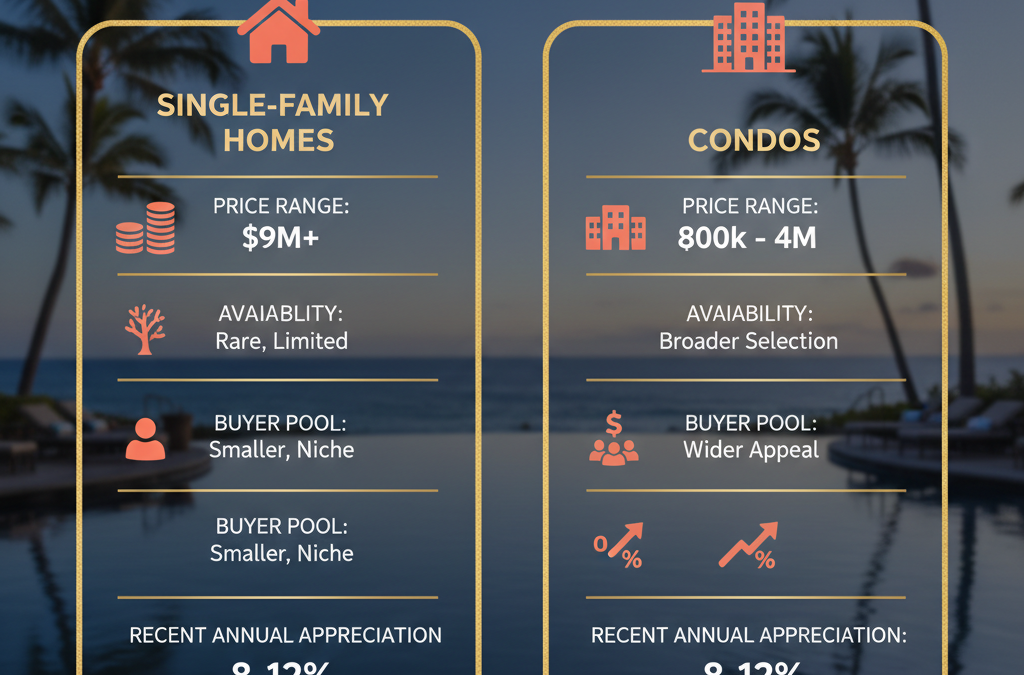

Quick Answer: No, the Hawaii real estate market is not in a bubble. It is experiencing a market correction driven by higher interest rates and limited inventory. The Kona-Kohala Coast remains particularly resilient due to finite land, strong demand from affluent buyers, and a tourism-based economy that supports long-term property values. Prices are stabilizing rather than declining sharply, creating a more balanced environment for buyers and sellers.
Key Takeaways: Navigating the Kona-Kohala Coast Luxury Market
- Hawaii’s Resilience: The Kona-Kohala Coast is less susceptible to dramatic downturns because of limited land supply and consistent demand from high-net-worth buyers.
- Market Correction, Not Crash: Current conditions reflect a slowdown in rapid price appreciation, not a collapse, largely influenced by rising interest rates.
- Opportunity for Buyers: Reduced bidding wars offer strategic entry points, though competition for prime properties remains strong.
- Strong Position for Sellers: Luxury homes continue to command solid prices due to intrinsic value and long-term desirability.
- Local Expertise Matters: Understanding micro-markets such as Kukio, Hualalai, Mauna Kea Resort, and Mauna Lani Resort is essential.
Is the Hawaii Real Estate Market in a Bubble or a Correction?
Quick Answer: It is a correction, not a bubble.
A true real estate bubble is typically fueled by speculation, easy credit, and prices far exceeding intrinsic value. When such bubbles burst, prices drop dramatically and foreclosures rise sharply. The current Hawaii market does not reflect those conditions.
What we are seeing instead is a response to higher interest rates and tighter monetary policy. Increased borrowing costs have cooled buyer activity, slowing the rapid appreciation experienced in prior years. At the same time, inventory remains limited, especially on an island with finite developable land. This supply constraint provides stability and prevents dramatic price declines.
The result is a rebalancing of supply and demand rather than a collapse.
Why Is the Kona-Kohala Coast Different from the National Market?
Quick Answer: Finite land, affluent buyers, and a strong tourism economy create a uniquely resilient market.
The Kona-Kohala Coast operates under distinct economic conditions. Land availability is inherently limited, which restricts new supply. Unlike many mainland markets, large-scale expansion is not possible.
Demand also comes from a significant number of high-net-worth buyers, many of whom purchase with cash or substantial equity. This reduces sensitivity to mortgage rate fluctuations compared to typical residential markets.
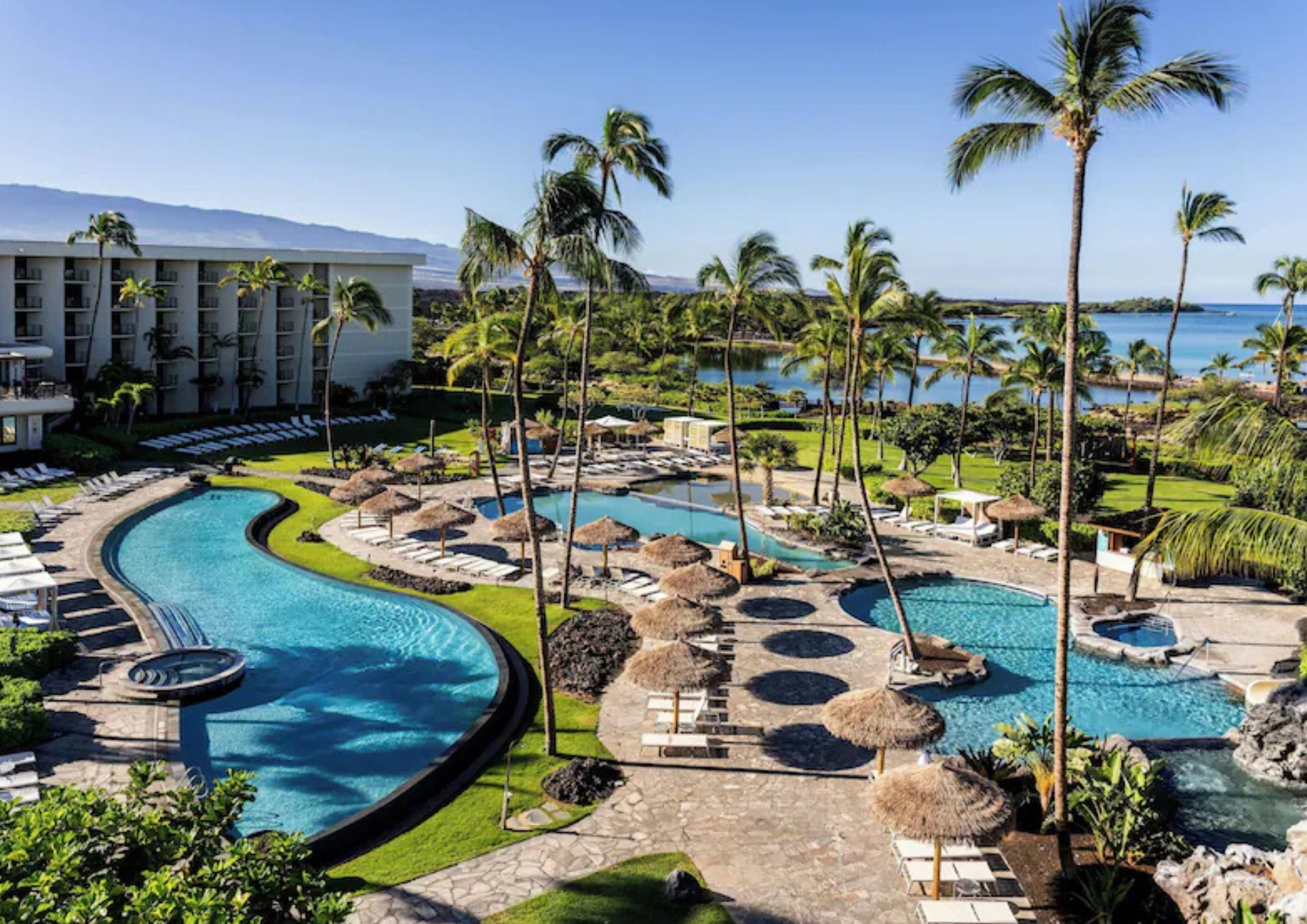
Additionally, tourism remains a foundational component of Hawaii’s economy. World-class resorts and consistent visitor traffic support property values and maintain long-term interest in ownership. Luxury communities such as Kukio, Hualalai Resort, Mauna Kea Resort, and Mauna Lani Resort continue to attract buyers seeking lifestyle, exclusivity, and stability.
What Does the Market Correction Mean for Buyers and Sellers?
Quick Answer: Buyers may experience less competition, while sellers can still achieve strong pricing with realistic expectations.
For buyers, especially those considering a second home or investment property, the current environment may offer greater negotiating leverage. The intense bidding wars and waived contingencies seen in prior years have moderated. Well-positioned buyers may find more thoughtful, strategic opportunities.
For sellers, expectations should adjust from the rapid appreciation of recent years. Properties may take longer to sell compared to peak conditions, but well-priced luxury homes in prime communities continue to achieve strong results. Strategic pricing, professional marketing, and deep local market knowledge are critical in this phase of the cycle.
In many cases, properties that previously sold within a week may now take 30 to 60 days, yet still close near asking price, reflecting a balanced but healthy market.
The Bottom Line
The Hawaii luxury real estate market, particularly on the Kona-Kohala Coast, is not in a speculative bubble. It is undergoing a measured correction influenced by broader economic conditions. Limited land, sustained demand, and a tourism-driven economy continue to support long-term value.
For both buyers and sellers, informed strategy and local expertise are essential to navigating this evolving but fundamentally strong market.
Frequently Asked Questions
What is the difference between a real estate bubble and a market correction?
A bubble involves unsustainable price growth driven by speculation and easy credit, often followed by a sharp crash. A correction is a moderate adjustment that brings pricing and activity back to sustainable levels without widespread collapse.
Are rising interest rates preventing luxury purchases?
Higher rates affect financing costs, but many luxury buyers are less dependent on traditional mortgages. While borrowing is more expensive, reduced competition can create strategic opportunities.
How does limited land affect long-term values?
Finite land supply restricts new inventory, supporting pricing stability. Scarcity remains one of the strongest long-term drivers of value in Hawaii’s luxury market.
Should buyers wait for significant price drops?
Large-scale price declines are unlikely given supply constraints and sustained demand. Waiting indefinitely may result in missed opportunities, particularly for prime properties.
Which communities are showing the most resilience?
Top-tier resort communities such as Kukio, Hualalai Resort, and Mauna Kea Resort continue to demonstrate stability due to exclusivity, amenities, and a consistent pool of qualified buyers.