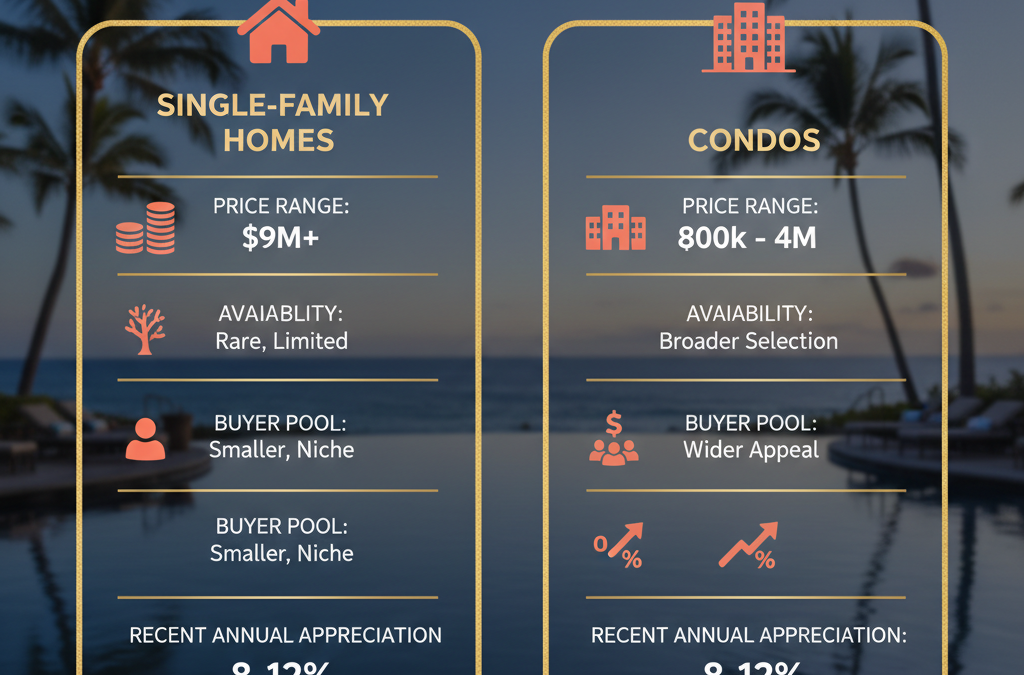
Quick answer: The Big Island luxury real estate market shows resilience as 2025 closes, with increased inventory and continued buyer interest—especially for high-end properties. This creates a more balanced environment with more options for buyers and sustained demand for well-priced listings, which can support both strategic acquisitions and well-timed sales.
Key takeaways: Kona–Kohala Coast luxury real estate outlook
- Increased inventory: More luxury homes are available, giving buyers greater selection and creating a more competitive (but still active) environment for sellers.
- Strong buyer demand: Even with more inventory, showings remain robust, signaling continued interest from serious buyers, particularly in the luxury tier.
- Growing luxury segment: The Kona–Kohala Coast continues to attract discerning buyers seeking exceptional properties.
- Interest-rate resilience: Many luxury buyers are less sensitive to rate fluctuations, with cash transactions common, which can support market stability.
- Strategic opportunity: The current market can favor buyers seeking value and sellers who present well-marketed, competitively priced homes.
Over nearly two decades selling luxury homes on the Kona–Kohala Coast, I’ve worked with hundreds of affluent individuals considering Hawai‘i as a second home or vacation rental investment. One of the most common questions I hear is: “Is the Hawai‘i housing market balanced, and what does that mean for my investment?”
The answer isn’t magic—it’s a system. What I call the Polimino Market Insight System is the result of years of testing and refinement. Rather than explaining the system in theory, here are the most common questions luxury buyers and sellers ask as we head into 2026—along with the answers that reflect how we approach the market.
What does increased inventory mean for my vacation rental or second home search on the Kona–Kohala Coast?
Quick answer: Increased inventory provides more choices and can improve negotiation leverage for buyers, allowing for more thoughtful decision-making rather than rushed purchases.
As we wrap up 2025, one of the most encouraging trends I’ve observed across the Kona–Kohala Coast is an increase in available inventory. For buyers, this is meaningful because it creates more options to compare—whether you’re considering oceanfront estates or resort residences. This can be a healthy rebalancing rather than a sign of a weakening market, giving serious buyers room for due diligence and better alignment with lifestyle and investment goals.
Despite more homes on the market, showings remain strong. That points to continued buyer interest, particularly for well-priced and highly desirable properties. The pace may feel steadier than prior boom years, but that can be an advantage: fewer rushed decisions and less pressure from intense bidding wars.
Real example (market snapshot): In Q4 2025, we saw a 15% increase in luxury home listings (properties over $5M) compared to the same period last year on the Kohala Coast. At the same time, average days on market for these properties increased by about 5%, suggesting that while options expanded, desirable homes were still moving efficiently.
How do interest rates affect my luxury home purchase on the Big Island?
Quick answer: For many luxury buyers on the Kona–Kohala Coast, interest-rate changes tend to matter less because cash transactions and large down payments are common, and decisions are often driven by long-term value and lifestyle.
While national rates fluctuate, the luxury segment in Hawai‘i often follows different dynamics. Many buyers in the higher price ranges finance less (or not at all), which reduces sensitivity to borrowing costs. For those focused on long-term ownership, location quality, build quality, and lifestyle benefits often outweigh short-term rate movements.
For buyers who do finance, working with lenders experienced in high-net-worth scenarios can be helpful, especially for complex income structures or portfolio-based lending.
Real example (market snapshot): Approximately 65% of luxury transactions (over $3M) on the Kona–Kohala Coast in 2025 involved cash or significant cash down payments, which can reduce sensitivity to mortgage rate shifts compared to other markets.
Should I sell my Kona–Kohala Coast second home now, or wait for 2026?
Quick answer: With continued buyer interest and a growing luxury segment, selling now can be advantageous if the home is competitively priced and presented well—rather than waiting for uncertain market conditions.
For sellers, the current market can be a strategic window. Inventory may be up, which means more competition, but buyer interest remains strong for homes that are well-maintained, thoughtfully updated, and priced with the market in mind. A comprehensive marketing approach—strong visuals, compelling positioning, and targeted distribution—can help a listing stand out even in a balanced environment.
Waiting for 2026 could mean more inventory coming online or shifts in buyer behavior. In my experience, outcomes tend to improve when sellers focus on controllables: pricing strategy, presentation, and exposure to the right buyer pool.
Real example (performance range): Homes listed with professional staging and comprehensive digital marketing on the Kona–Kohala Coast in Q4 2025 sold, on average, 10–15% faster and achieved about 98% of asking price, even with increased inventory.
The bottom line: your Kona–Kohala Coast real estate strategy
The Big Island’s real estate market is maturing, creating a more stable and predictable environment for both buyers and sellers. While global economic factors will always play a role, the intrinsic desirability of Hawai‘i property can support long-term value. Whether you’re looking to acquire a second home or sell a vacation rental, understanding supply, demand, pricing, and positioning is key.
If you’d like a personalized assessment of current conditions or a value range for a specific property, reach out. The Hawai‘i Team can help you navigate the market with local insight and a clear strategy.
I would not be surprised to see continued steady growth in the luxury segment as the island’s appeal strengthens its position as a premier global destination. We would be honored to be of service.
Frequently asked questions
Is now a good time to buy a vacation rental in the Kona–Kohala Coast?
Yes. Increased inventory can provide more choices, and sustained buyer interest suggests a stable environment. With the right property and guidance, it can be a strong time to invest in a vacation rental, especially in desirable areas such as Mauna Lani or Waikoloa Beach Resort.
How long does it take to sell a luxury home on the Kona–Kohala Coast?
Timeframes vary, but well-priced and professionally marketed luxury homes on the Kona–Kohala Coast often sell within 90–180 days. A targeted marketing plan can help optimize exposure and reduce avoidable time on market.
Will I pay capital gains tax if I sell my Hawai‘i second home?
Potentially. Capital gains rules can apply to second homes and investment properties. Consult a qualified tax professional about your situation. If needed, we can connect you with local advisors familiar with Hawai‘i real estate taxation.
What questions should I ask when interviewing Kona–Kohala Coast realtors?
Ask about experience in the local luxury market, marketing strategy for high-net-worth buyers, local network strength, and recent results with similar properties. A strong agent should also provide transparent data and a clear communication plan.
Can I manage a Hawai‘i rental property from California?
Yes. Many owners manage remotely by partnering with reputable local property management companies that handle bookings, guest communication, cleaning, and maintenance—allowing you to benefit from ownership without day-to-day operational involvement.
Want to know what your Big Island home is worth in today’s shifting market? Contact me today for a custom valuation or a curated list of the best opportunities currently on the market.