Quick answer: Failing to properly vet rental revenue expectations for a short-term vacation rental on the Kona–Kohala Coast can create serious financial strain and turn a dream investment into a burden. Without accurate, expert-interpreted projections, you may overestimate income, underestimate expenses, and struggle to cover your mortgage and operating costs—potentially jeopardizing your investment.
Key takeaways: securing your Kona–Kohala Coast investment
- Accurate projections are paramount: Overly optimistic rental income forecasts—especially from generic online tools—can lead to substantial shortfalls for your Big Island vacation rental.
- AirDNA is a starting point, not the final word: It can be helpful for initial data, but it may project occupancy rates higher than what is realistically achievable in the luxury Kona–Kohala market.
- Professional interpretation is non-negotiable: An experienced local expert can translate raw data into realistic, actionable projections that account for market nuances and property-specific factors.
- Plan for realistic occupancy: Budgeting around 60–65% occupancy is often more prudent than relying on 75–80%+ assumptions, especially if you plan personal use.
- Your use case dictates vetting needs: If it is purely a second home with no rental intent, projection vetting is less critical. If rental income matters, rigorous analysis is essential.
Understanding the pitfalls of unvetted vacation rental projections
Over nearly two decades selling luxury homes on the Kona–Kohala Coast, I’ve worked with hundreds of affluent buyers considering Hawaiʻi as a second home or vacation rental investment. One of the most common questions I hear is: “What happens when you don’t properly vet rental revenue expectations or projections before buying a short-term vacation rental on the Big Island?”
The answer isn’t magic—it’s a system. What I call the Polimino Investment Clarity System is the result of years of testing and refinement. Rather than outlining the entire system here, below are three common questions buyers ask me about rental projections and the practical reasons we approach projections differently.
What happens when I don’t properly vet rental income for my Big Island vacation rental?
Quick answer: You could face significant financial pressure, including difficulty covering property expenses, increased stress, and the possibility of having to sell sooner than planned.
When you don’t properly vet rental revenue expectations for a short-term vacation rental on the Kona–Kohala Coast, you’re effectively buying without clear financial visibility. The primary risk is that actual rental income falls short of optimistic projections. This impacts more than the mortgage—owners must also cover property taxes, HOA dues, insurance, utilities, maintenance, and property management fees. If the income does not materialize, those costs come directly out of pocket, turning what was meant to be an investment or partially self-sustaining second home into a financial liability. A core principle of the Polimino Investment Clarity System is building conservative, sustainable projections.
Real example (illustrative): I’ve seen buyers rely on online projections of $150,000 in annual gross income, only to find actual performance closer to $90,000. A $60,000 annual gap can have a major impact on cash flow and the enjoyment of the property.
Should I trust AirDNA projections when buying a Hawaiʻi vacation rental?
Quick answer: AirDNA can be a useful starting point, but it should not be the sole basis for an investment decision. Projections may overestimate occupancy for luxury properties on the Kona–Kohala Coast.
Tools like AirDNA can provide helpful high-level data on average daily rates, revenue ranges, and potential occupancy based on nearby listings. However, algorithms do not always account for the nuances of the luxury market on the Kona–Kohala Coast, differences between micro-locations, or the impact of owner usage. In practice, I often see projected occupancies in the 75–82% range for high-end homes. While those numbers look attractive, they can be difficult to achieve consistently—especially if the owner blocks time for personal use. A more conservative approach is to cross-check any projection against real-world performance for truly comparable properties.
Real example (illustrative): If a model suggests 80% occupancy, our experience with comparable luxury homes—after accounting for seasonality and owner usage—may support a more sustainable range closer to 60–65%. A 15–20% difference in occupancy can mean tens of thousands of dollars in annual revenue.
How can a professional help me get realistic rental projections for my Kona–Kohala Coast vacation rental?
Quick answer: A seasoned professional can interpret data, adjust for local market realities and property specifics, and produce conservative projections that reflect owner usage and potential market shifts.
If you are considering a vacation rental investment on the Kona–Kohala Coast, it helps to work with a professional who can do more than run numbers. The value is in interpretation. Instead of providing a single tool-based output, the Polimino Investment Clarity System evaluates multiple inputs and then adjusts assumptions based on current market conditions, property features (for example, oceanfront vs. golf-course view, bedroom count, and amenities), and your intended use. This approach helps determine whether a projection is realistic, partially realistic, or unlikely.
Real example (illustrative): A buyer evaluating a four-bedroom home may see an average daily rate of $1,200 in a report. Based on comparable bookings and the home’s condition and location, a more realistic budgeting range might be $950–$1,050. Over 200 nights, that adjustment can change expected annual gross revenue by roughly $30,000–$50,000.
The bottom line: invest with clarity on the Kona–Kohala Coast
Investing in a luxury vacation rental on the Kona–Kohala Coast is a major decision. The appeal of high revenue can sometimes overshadow the need for rigorous due diligence. The goal of the Polimino Investment Clarity System is to help you move forward with clear, realistic assumptions so your financial plan is sustainable and your ownership experience is enjoyable.
I would not be surprised to see more buyers seeking expert interpretation of rental data as the market evolves. We would be honored to be of service. If you are interested in buying, selling, or investing in real estate on the Big Island, contact us at The Hawaiʻi Team. Call (808) 987-3306. You can also visit thehawaiiteam.com. Until we talk again, aloha.
Frequently asked questions
Q: Is AirDNA reliable for predicting rental income for luxury properties on the Kona–Kohala Coast?
A: AirDNA can provide useful aggregate data and is a good starting point, but it may overestimate occupancy for luxury vacation rentals. It is best used alongside local, property-specific interpretation.
Q: What’s a realistic occupancy rate for a luxury vacation rental on the Kona–Kohala Coast?
A: It varies by resort and property, but a conservative planning range is often around 60–65% when factoring in seasonality and potential owner usage.
Q: How can a professional help with rental projections beyond just running the numbers?
A: A professional can interpret data in context—adjusting for micro-market conditions, property features, recent performance of comparable homes, and your personal usage plans—so projections reflect real-world operating conditions rather than a single algorithm.
Q: What are the biggest hidden costs that impact rental revenue projections for a Big Island vacation rental?
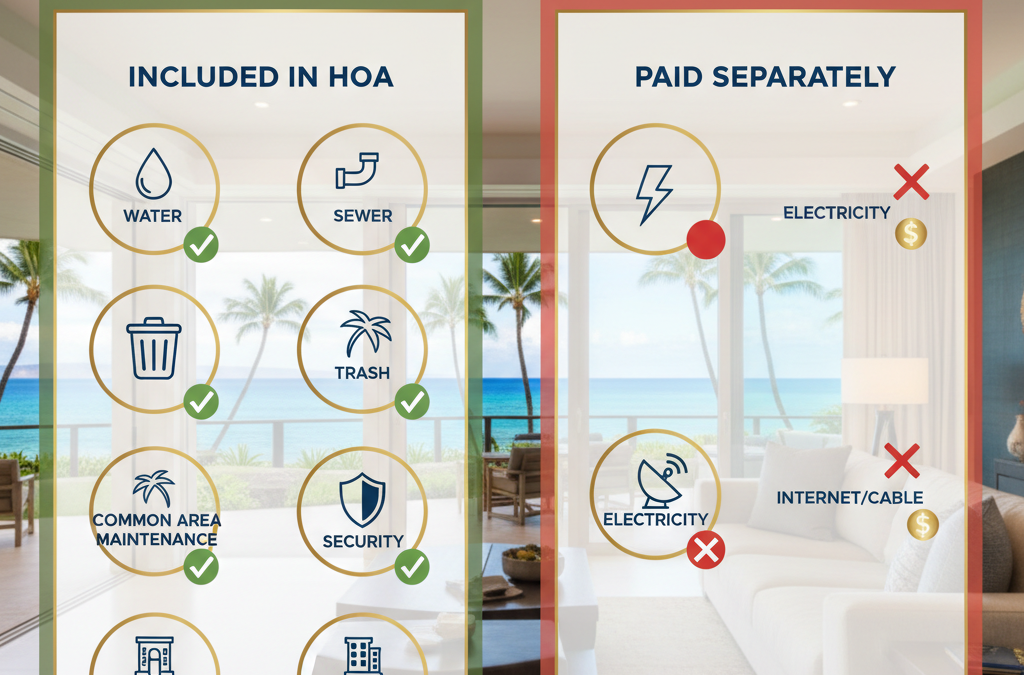
A: Common items include utilities, maintenance in a tropical climate, property management fees (often a percentage of gross revenue), insurance, HOA dues, property taxes, supplies, and the revenue impact of owner-blocked dates.
Q: If I only plan to use my Kona–Kohala Coast property as a second home and not rent it, do I still need to vet rental projections?
A: If you have no intention to rent, rental projections may not be essential to your immediate financial planning. However, understanding rental potential can still be useful for resale considerations or future flexibility.