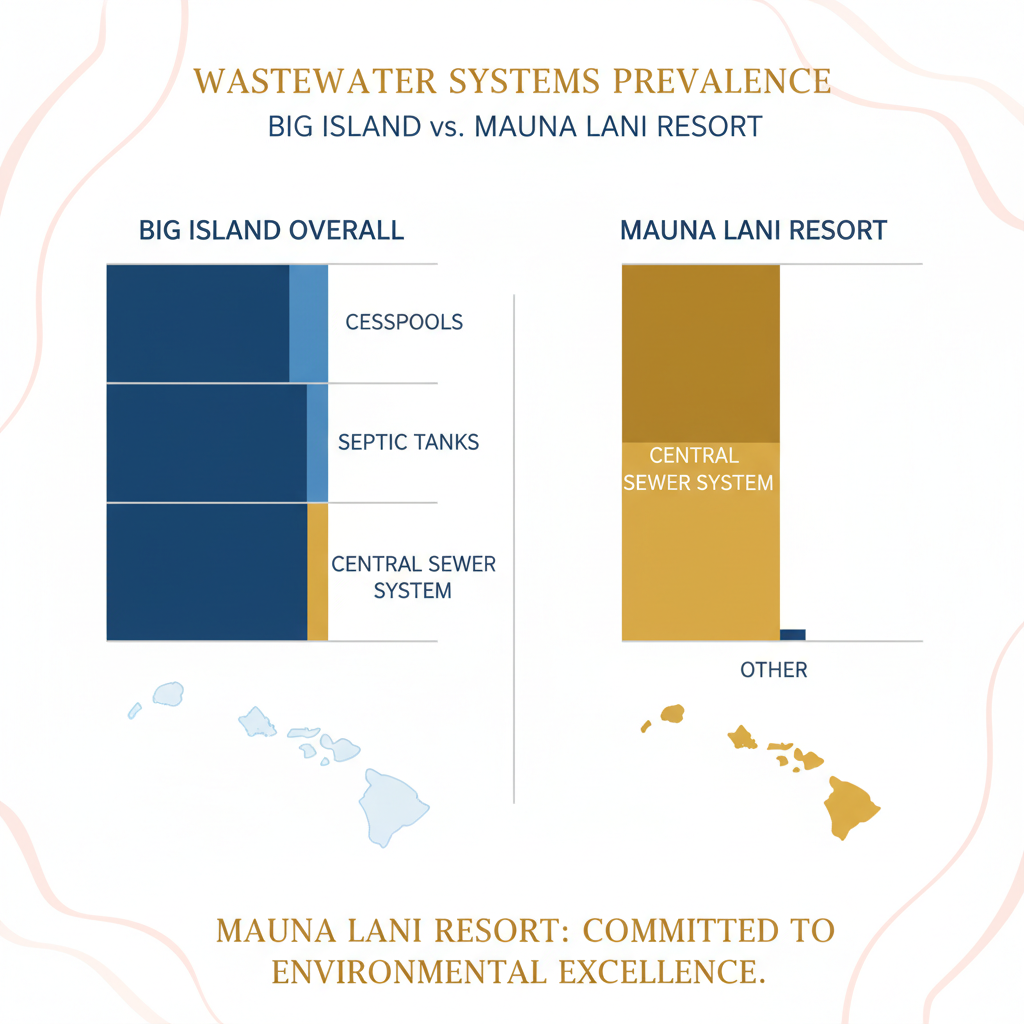
Quick Answer: Most homes within the Mauna Lani Resort are connected to a central sewer system. Septic tanks and cesspools are rare in these primary resort areas due to stringent Hawaii Department of Health regulations, especially for oceanfront properties, which mandate connection to a centralized treatment plant to protect coastal waters.
Key Takeaways: Understanding Wastewater Management on the Kona-Kohala Coast
- Mauna Lani Central Sewer: Properties within Mauna Lani Resort, along with Mauna Kea and Waikoloa Beach Resorts, are predominantly connected to central sewer systems with dedicated treatment plants.
- Strict Oceanfront Laws: Hawaii has strict laws preventing the discharge of sewage into the ocean, requiring oceanfront complexes and hotels to utilize mainline sewers and treatment facilities.
- Septic Tanks vs. Cesspools: While common on the Big Island (80% of properties use cesspools), these systems are generally not found in the major luxury resorts like Mauna Lani.
- State Conversion Efforts: The Hawaii State Legislature is actively working to convert cesspools to septic tanks or central sewer systems across the Big Island due to environmental concerns.
Over nearly two decades selling luxury homes on the Kona-Kohala Coast, I’ve worked with hundreds of affluent buyers and sellers. One of the most common questions I hear is: “What should I expect for sewer systems in my new Hawaii home?”
The answer isn’t magic—it’s a system. What I call the Polimino Property Insights is the result of years of testing, refinement, and proven results. But rather than just telling you about the system, let me answer the three most common questions luxury buyers ask me about wastewater management. These are real questions from real buyers, and the honest answers that explain exactly what we do differently.
Should I worry about septic tanks or cesspools for my Mauna Lani second home?
For a second home or vacation rental within the Mauna Lani Resort, you generally should not worry about septic tanks or cesspools. This is a core insight from my Polimino Property Insights system: major luxury resorts like Mauna Lani, Mauna Kea, and Waikoloa Beach are almost universally connected to central sewer systems. These resorts operate their own wastewater treatment plants, a direct result of strict Hawaii Department of Health regulations, particularly concerning oceanfront properties. These laws mandate that sewage cannot be discharged into the ocean, ensuring environmental protection for our pristine coastal waters. For example, virtually all properties within the Mauna Lani master-planned community are hooked into the resort’s advanced sewer infrastructure, providing peace of mind and reducing maintenance concerns compared to individual systems.
What is a septic tank and how does it work for homes on the Kona-Kohala Coast?
A septic tank is a common individual wastewater treatment system, primarily found in more rural or older communities on the Kona-Kohala Coast, not typically within luxury resorts. It’s essentially a large, watertight container, usually plastic or concrete, buried underground. All household wastewater flows into this tank, where solids settle to the bottom, forming sludge, and lighter materials, like grease, float to the top, forming scum. The liquid effluent then flows out of the tank into a distribution box, which disperses it into a leach field. This field, typically a network of perforated pipes laid in gravel and sand, allows the wastewater to slowly filter into the soil for natural treatment. Unlike cesspools, septic tanks require periodic pumping, usually every four to eight years, by a local service provider, a detail I always emphasize in my Polimino Property Insights for clients considering such properties.
What’s the difference between a cesspool and a septic tank, and why does Hawaii want to get rid of cesspools?
The primary difference between a cesspool and a septic tank lies in their treatment and discharge methods, a critical distinction for environmental impact. A cesspool is essentially a large, unlined or partially lined hole in the ground where all household wastewater collects and then leaches directly into the surrounding soil and groundwater without any significant treatment. This direct discharge poses a substantial environmental risk, as untreated sewage can contaminate drinking water sources and coastal ecosystems. The Hawaii State Legislature is actively working to convert the estimated 80,000 cesspools statewide to more environmentally sound septic systems or connect them to central sewers, driven by federal mandates and local concerns for public health and environmental protection. For instance, the County of Hawaii Department of Environmental Management is overseeing conversion programs, reflecting the state’s commitment to phasing out these outdated systems, a key topic I address in my Polimino Property Insights when discussing property due diligence.
The Bottom Line: Your Mauna Lani investment is likely on a modern sewer system.
When investing in a luxury property within Mauna Lani Resort, you can confidently expect your home to be connected to a robust, centralized sewer system. This is a significant advantage, reducing environmental concerns and maintenance responsibilities that come with individual septic or cesspool systems. The Polimino Property Insights system ensures that clients understand these critical infrastructure details, providing clarity and peace of mind for their high-value investments on the Kona-Kohala Coast.
I would not be surprised to see continued state-level efforts to phase out cesspools across the Big Island, further enhancing environmental quality. We would be honored to be of service.
Frequently Asked Questions
Q: Are all Big Island properties on a central sewer? A: No, only properties within major luxury resorts like Mauna Lani, Mauna Kea, and Waikoloa Beach are typically on central sewers. Approximately 80% of properties on the Big Island still use cesspools, though the state is working to convert them.
Q: How do Hawaii’s strict oceanfront discharge laws affect luxury properties? A: These laws mandate that oceanfront hotels and complexes, including many luxury properties, must be connected to a mainline sewer and treatment plant, preventing direct discharge into the ocean and protecting coastal ecosystems.
Q: What is the Hawaii Department of Health’s role in wastewater management? A: The Hawaii Department of Health sets and enforces strict regulations for wastewater treatment and disposal, including requirements for central sewer connections in sensitive areas and the ongoing push to convert cesspools due to environmental concerns.
Q: If a property has a septic tank, what maintenance is required? A: Septic tanks require periodic pumping, typically every four to eight years, by a licensed local company to remove accumulated solids. This is a standard maintenance item for properties with individual septic systems.
Q: Is the County of Hawaii Department of Environmental Management involved in sewer systems? A: Yes, the County of Hawaii Department of Environmental Management oversees local sewer system operations and is actively involved in initiatives to upgrade wastewater infrastructure, including cesspool conversion programs.