
Quick Answer: August saw a notable slowdown in luxury resort real estate sales on the Kona-Kohala Coast, with only four home and four condominium transactions recorded. This reflected a quieter summer period, with average home sale prices at $7,868,750 and condominiums at $2,587,500, indicating a potential seasonal dip or broader market adjustment.
Key Takeaways: August 2023 Kona-Kohala Coast Luxury Market Snapshot
- Slower Pace: August 2023 concluded with fewer transactions than typical, suggesting a seasonal lull or market rebalancing for luxury properties.
- High-Value Home Sale: Kohanaiki recorded a significant $24.5 million home sale, demonstrating continued demand at the ultra-luxury tier.
- Condo Market Activity: Hualalai, Mauna Lani, and Waikoloa Beach Resorts saw condominium sales, with properties moving relatively quickly, particularly in Waikoloa.
- Average Days on Market: Homes averaged 83 days on market, while condominiums moved faster at an average of 28 days, highlighting different buyer urgency.
- Economic Influences: Market performance likely reflects a combination of flat visitor numbers and broader economic trends impacting buyer confidence.
Over nearly two decades selling luxury homes on the Kona-Kohala Coast, I have worked with hundreds of affluent, primarily mainland-based individuals considering Hawaii as a second home or vacation rental investment. One of the most common questions I hear when reviewing monthly statistics is: “Should I act now or wait?”
The answer is not magic—it is a system. What I call the Polimino Market Intelligence System is the result of years of testing, refinement, and proven results. Rather than simply describing the system, let me address the most common questions buyers and sellers ask about August market performance.
Why were August luxury home and condominium sales slower than expected on the Kona-Kohala Coast?
Quick Answer: August’s slower sales pace was likely the result of seasonal patterns, flat visitor numbers, and broader economic sentiment, leading to fewer active luxury buyers.
August is often a transitional month. While visitor traffic can remain steady, luxury real estate activity does not always directly mirror tourism trends. Many high-net-worth buyers are making long-term investment decisions and may prefer to finalize transactions outside peak vacation periods. When the pool of active, qualified buyers temporarily contracts, transaction volume naturally declines.
Understanding the underlying reasons behind the data is essential. Seasonal shifts, combined with macroeconomic factors, influence buyer behavior. A slower month can create opportunity for buyers seeking reduced competition, while sellers may benefit from preparing for stronger seasonal activity later in the year.
Real example: Historically, months with lower visitor arrivals often correspond with fewer new luxury listings and closed sales. Flat visitor numbers this August likely contributed to a quieter transaction environment, reinforcing seasonal buying patterns.
What were the average prices and days on market for luxury homes and condominiums in August?
Quick Answer: In August, the average sale price for luxury homes on the Kona-Kohala Coast was $7,868,750 with an average of 83 days on market. Condominiums averaged $2,587,500 and sold in an average of 28 days.
These figures provide a clear snapshot of market conditions. The 83-day average for homes reflects the deliberate nature of luxury purchases, where buyers conduct thorough due diligence before committing. The 28-day average for condominiums indicates comparatively stronger urgency in that segment, often driven by lifestyle buyers or investors seeking vacation rental opportunities.
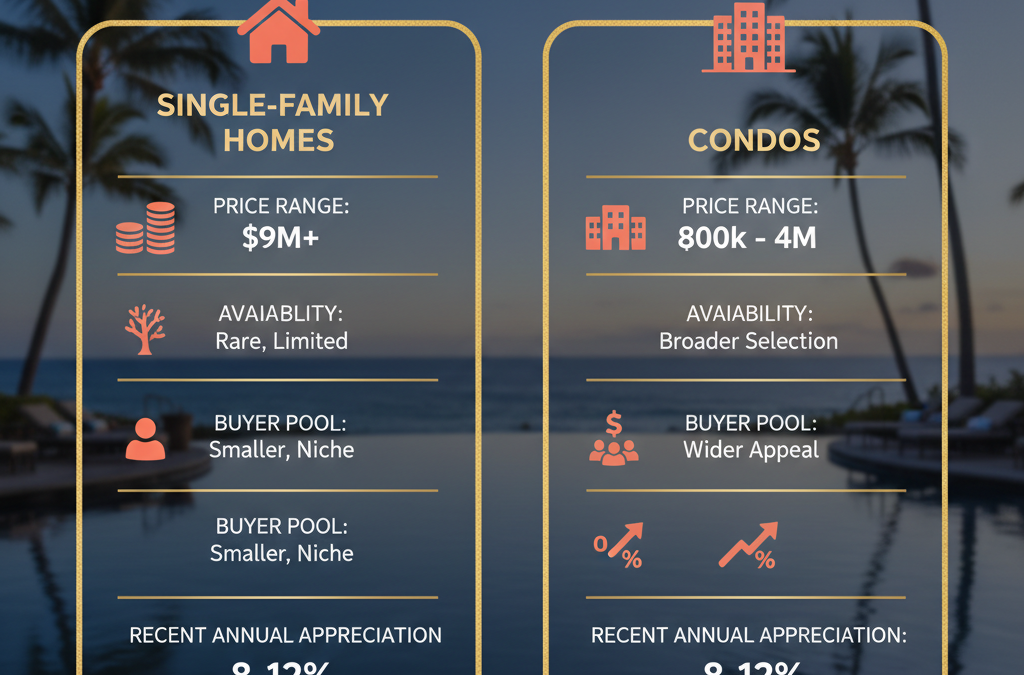
The difference in pace between homes and condominiums highlights the importance of pricing strategy and market positioning. Luxury homes typically involve higher price points and more selective buyer pools, while condominiums may appeal to a broader segment of qualified buyers.
In markets like the Kona-Kohala Coast, analyzing both pricing and absorption rates provides better insight than transaction volume alone. Strategic decision-making depends on understanding these nuances rather than reacting solely to headline numbers.