Quick Answer: Legal disputes, especially those involving the origins or true ownership of a property’s concept, can introduce unforeseen risks and liabilities for buyers of flipped second homes. It is important to conduct thorough due diligence, including title searches and reviewing the property’s transaction history, to protect your investment and avoid potential complications related to past claims.
Key Takeaways: Protecting Your Kona-Kohala Coast Investment
- Due Diligence Is Paramount: Always investigate a property’s full history, particularly if it has been flipped recently.
- Understand Contractual Obligations: Disputes over intellectual property or profit-sharing agreements can indirectly affect a property’s marketability or perceived value.
- Seek Expert Legal Counsel: Engage a local real estate attorney familiar with Hawaii property law to review the transaction.
- Work With a Trusted Advisor: An experienced real estate professional can help identify potential red flags and guide you through complex scenarios.
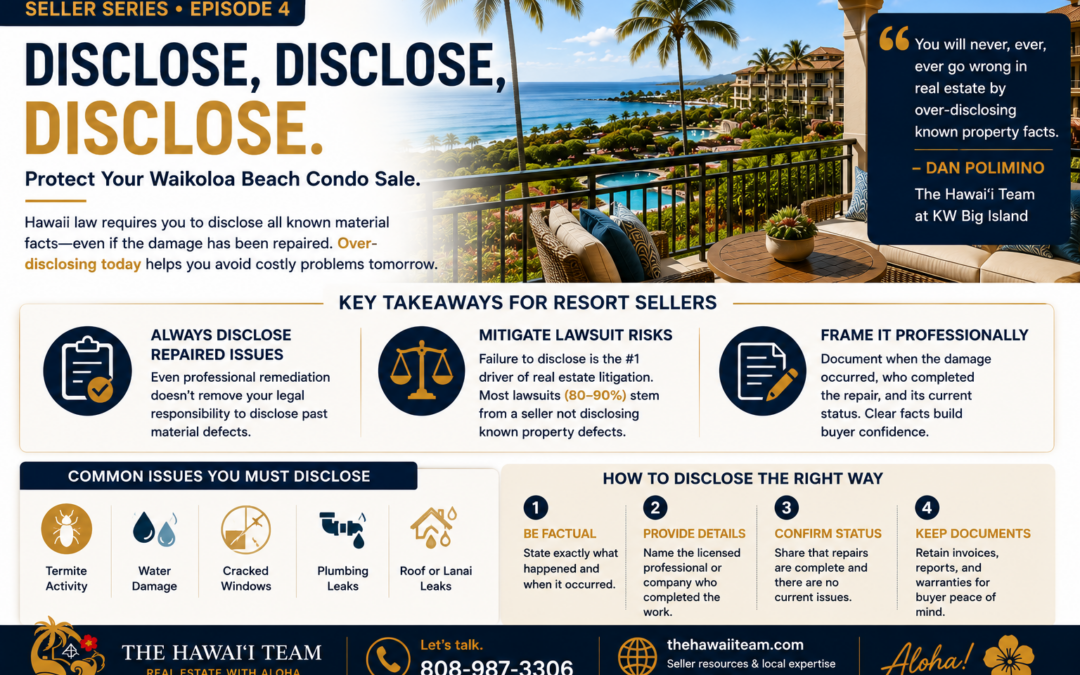
- Review Disclosure Statements Carefully: Ensure that all known issues, repairs, or disputes related to the property are properly disclosed by the seller.
Navigating the Complexities of Flipped Properties and Legal Claims
Over nearly two decades selling luxury homes on the Kona-Kohala Coast, I have worked with hundreds of buyers considering Hawaii as a second home or vacation rental investment. One question that frequently arises is whether legal disputes should be a concern when purchasing a flipped property.
The answer requires a systematic approach. What I refer to as the Polimino Due Diligence Framework reflects years of experience evaluating properties and helping buyers understand potential risks. Rather than simply describing the framework, the following sections address common questions buyers ask about legal disputes and flipped properties.
What Are the Risks of Investing in a Hawaii Vacation Rental That Was Part of a Flip or Media Project?
Investing in a vacation rental that has been flipped can involve risks beyond the usual concerns of renovation quality and undisclosed defects. In some situations, legal issues may arise related to development agreements, intellectual property claims, or profit-sharing arrangements connected to the renovation or promotion of the property.
Although these claims may not directly affect ownership or title, they can sometimes create negative publicity or raise questions about the property’s history. Properties that receive public attention can attract additional scrutiny, which may influence buyer perception or extend the time required to sell the property in the future.
How Can I Protect My Investment From Legal Issues Related to a Property’s Past Flip or Development?
Protecting your investment begins with comprehensive due diligence. This includes a detailed title search to identify liens, encumbrances, or prior disputes associated with the property. Reviewing disclosure statements and past transaction records is also essential.
Working with a qualified local real estate attorney can help ensure that all documents are reviewed carefully and that potential liabilities are identified early in the process. Buyers should also evaluate the reputation and track record of developers or flippers associated with the property, particularly when multiple rapid transactions have occurred within a short time frame.
Should I Be Concerned About Legal Disputes When Buying a Flipped Second Home on the Kona-Kohala Coast?
While many flipped properties are excellent opportunities, buyers should approach them with careful evaluation. Legal disputes related to development agreements or business partnerships can occasionally arise after renovations are completed.
Although buyers are rarely direct participants in these disputes, the property’s association with a controversy can sometimes influence resale value or market perception. Conducting a thorough review of the property’s history and ensuring that all required disclosures are provided helps reduce these risks.
Unexpected legal complications can increase transaction costs and create delays, making thorough due diligence an essential part of any purchase.
The Bottom Line: Due Diligence Is Your Best Protection
Purchasing luxury real estate on the Kona-Kohala Coast, particularly properties that have been recently renovated or flipped, requires careful research and professional guidance. Reviewing the property’s history, consulting legal professionals, and working with knowledgeable advisors can help ensure that your investment is sound.
As the real estate market evolves, buyers are increasingly placing greater emphasis on transparency, developer reputation, and clear documentation during property transactions.
Frequently Asked Questions
Q: What are common legal challenges for vacation rental owners in Hawaii?
A: Common issues include zoning restrictions, transient vacation rental permit requirements, homeowner association rules, and disputes related to property management agreements.
Q: How can I protect my investment from unexpected legal issues?
A: Purchasing title insurance, conducting a professional property inspection, and working with an experienced real estate attorney can significantly reduce the likelihood of legal complications.
Q: Does a property’s appearance on a television program affect its market value?
A: Media exposure can increase interest in a property, but negative publicity or legal disputes connected to that exposure may discourage some buyers.
Q: What role do professional real estate organizations play in protecting buyers?
A: Professional organizations establish ethical standards for agents, provide standardized contracts, and offer dispute resolution resources designed to support fair and transparent transactions.
Q: Why is a local real estate attorney important for a Kona-Kohala Coast purchase?
A: A local attorney understands Hawaii-specific property laws, resort community regulations, and regional transaction practices, which can help identify potential issues early in the process.